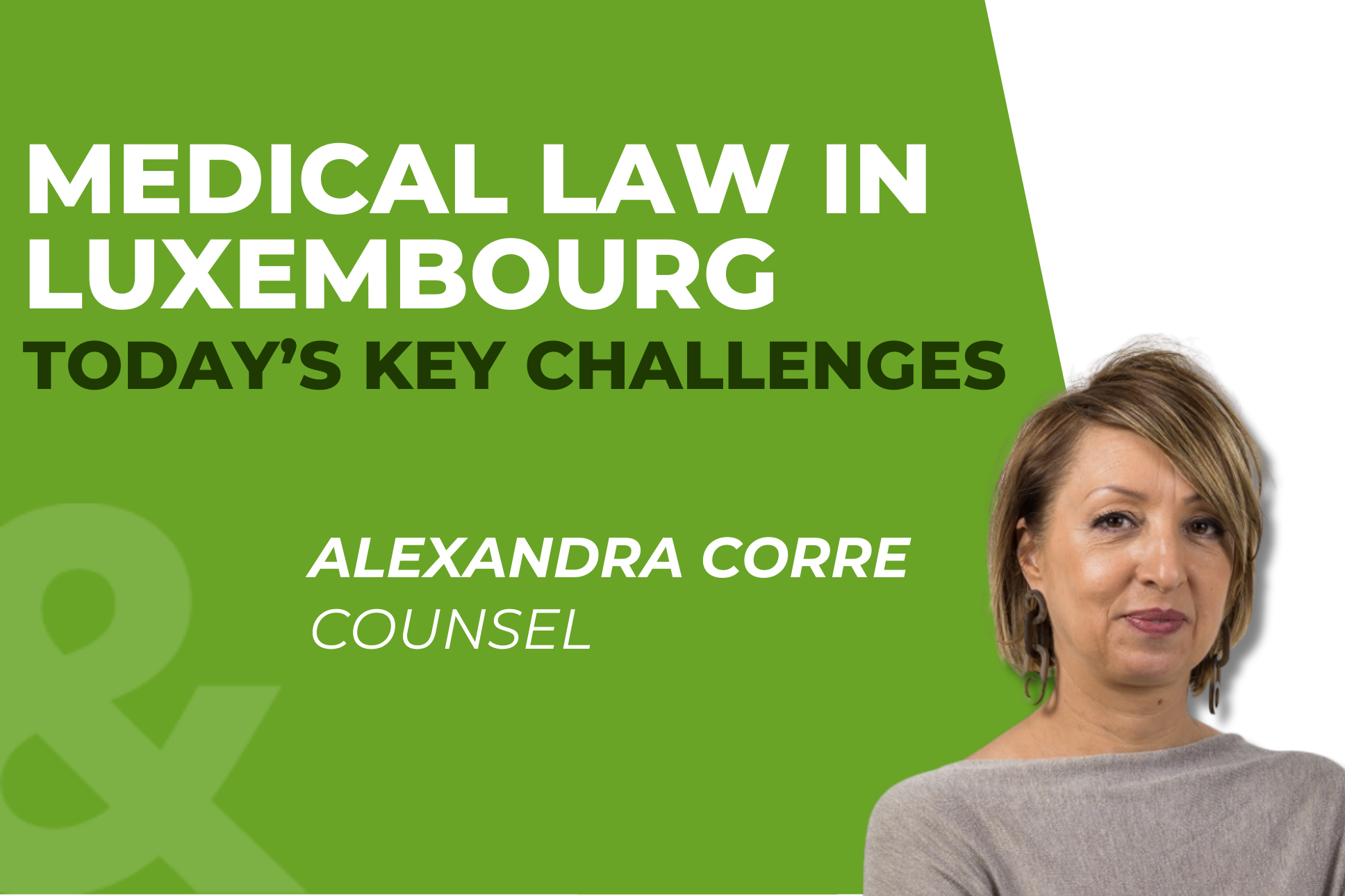
Ten years after the law of 24 July 2014, the obligation to inform patients remains an essential principle of Luxembourg medical law. But between legal requirements, adaptation to the patient and the risk of litigation, does it really guarantee informed consent?
Legal basis for the obligation to provide information
The obligation to inform patients is a fundamental requirement of Luxembourg medical law. It is based on respect for human dignity, personal autonomy and physical integrity, which are protected by the Constitution and the European Convention on Human Rights. Legally, it is enshrined in Article 8 of the amended law of 24 July 2014 on patient rights and obligations, which requires healthcare professionals to provide patients with clear, intelligible and appropriate information about their state of health, the proposed examinations or treatments, as well as their risks, consequences and possible alternatives.
The aim is to enable free and informed consent to any medical procedure. This information, which must be provided in advance except in life-threatening emergencies, concerns the diagnosis, the expected benefits, the alternatives, but also the possible complications, even if they are rare. In the event of a breach, the professional may be held liable, regardless of any technical fault. The patient does not have to prove that they would have refused treatment if they had been properly informed, but only that the lack of information affected their freedom of decision.
Scope and implementation of the information obligation
The scope of this obligation varies depending on the clinical situation and the patient’s profile. For minors or adults under guardianship, the information is provided to the legal representative, while prioritising dialogue with the person if they are capable of understanding. Furthermore, certain disciplines, such as medically assisted reproduction or clinical trials, are subject to stricter regulations, illustrating the attention paid to risky procedures or ethical issues.
In practice, the difficulty often lies in the extent of the information: if it is too brief, it becomes legally insufficient; if it is too technical, it becomes incomprehensible. The practitioner must adapt their discourse, answer the patient’s questions and document the exchange. This obligation is an ongoing process that cannot be reduced to a simple form to be signed. Luxembourg case law is gradually refining the contours of this obligation, influenced by French and European law, and tends to strengthen the patient’s position in the event of a dispute. Thus, information becomes a pillar of the therapeutic relationship, guaranteeing transparency, trust and mutual respect.
Conclusion
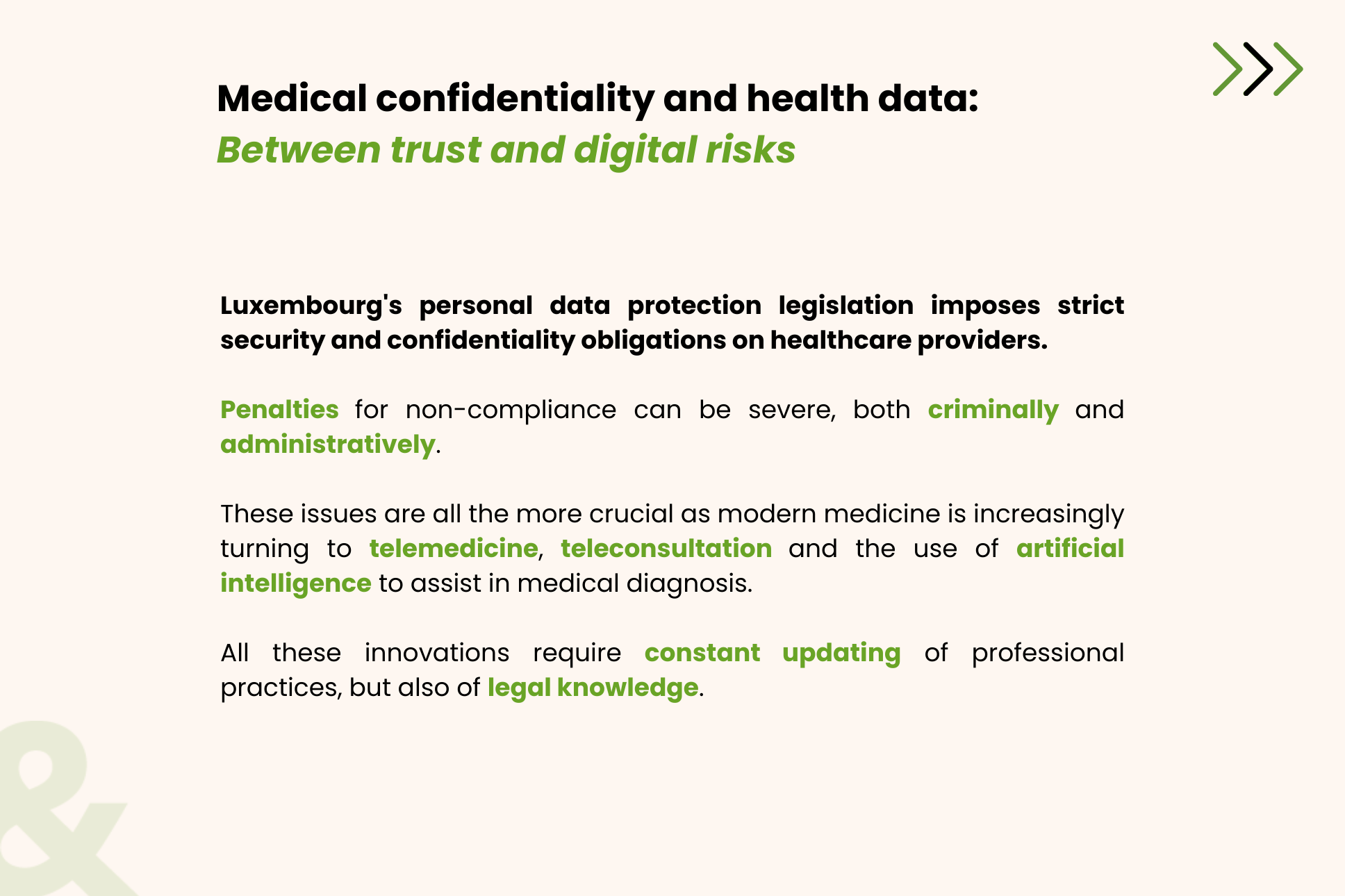
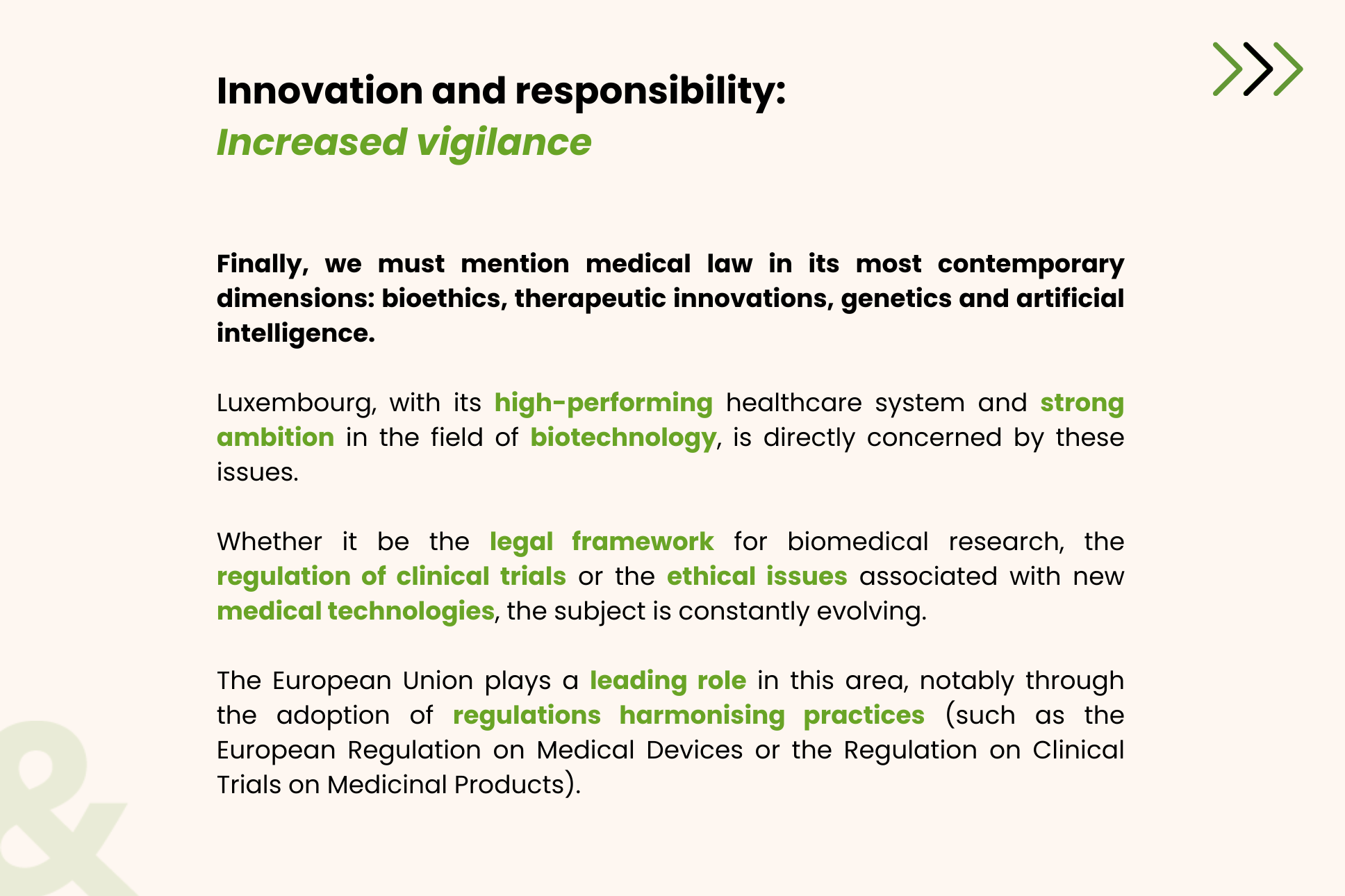
Medical law in Luxembourg is a constantly evolving field, at the crossroads of law, medicine and ethics. It is based on fundamental principles such as informed consent, professional responsibility and data protection. With increasing technical complexity and the emergence of new risks, it is essential to stay informed and trained.
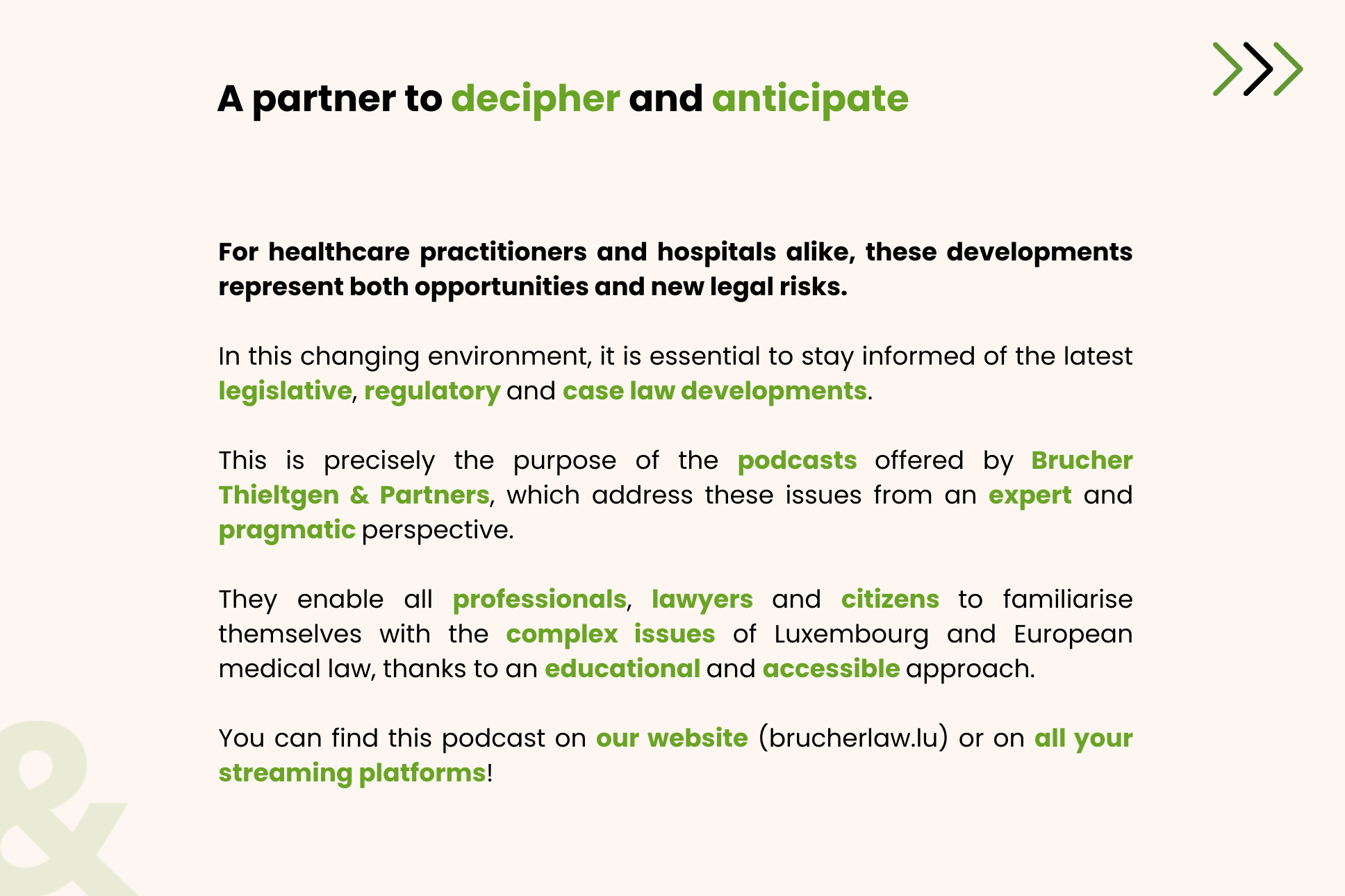
With this in mind, a series of podcasts is available on our website and on all your listening platforms, allowing you to explore these complex issues in an accessible and rigorous manner.
For all your medical law needs, the law firm Brucher Thieltgen & Partners is here to assist you. Please do not hesitate to contact our experts:
Marie Bena, Partner : marie.bena@brucherlaw.lu
Alexandra Corre, Counsel : alexandra corre@brucherlaw.lu